How Often Should Commercial HVAC Systems Be Replaced? A Central Coast Business Guide
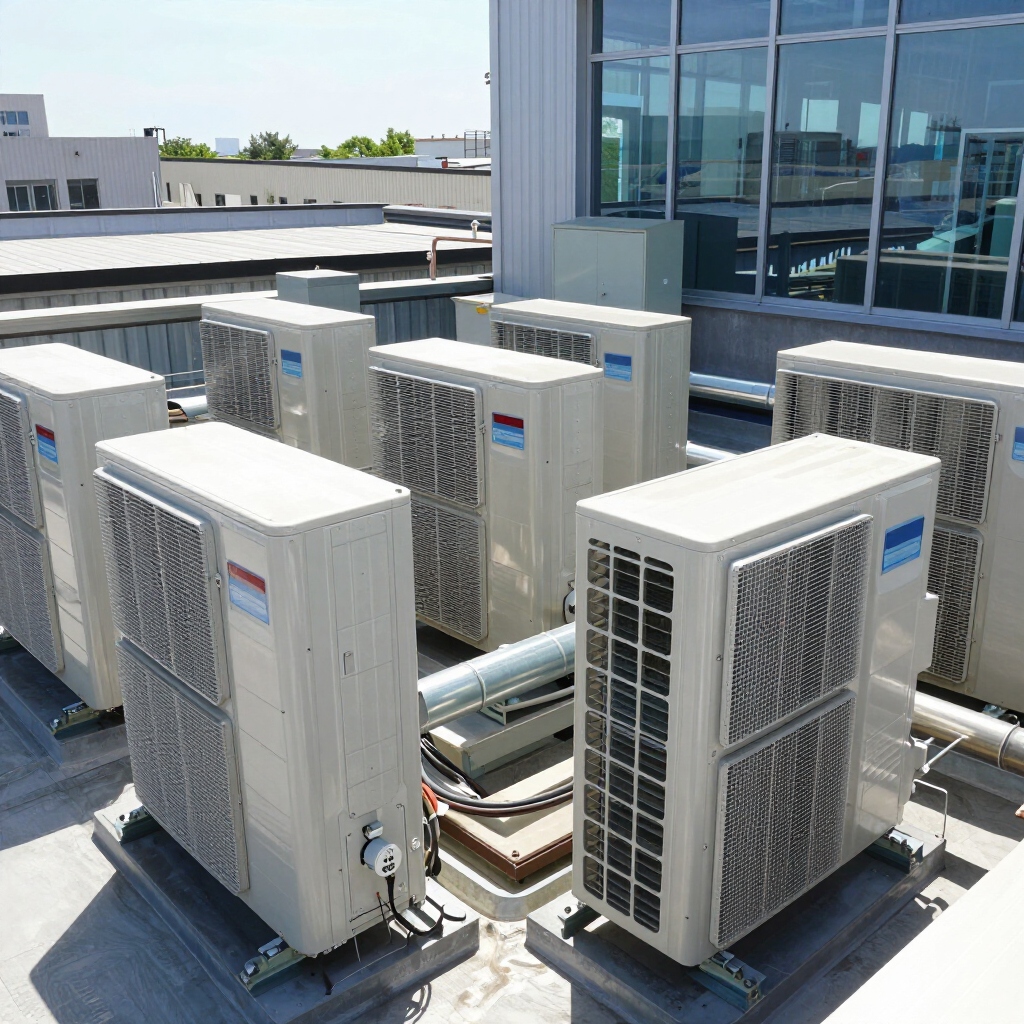
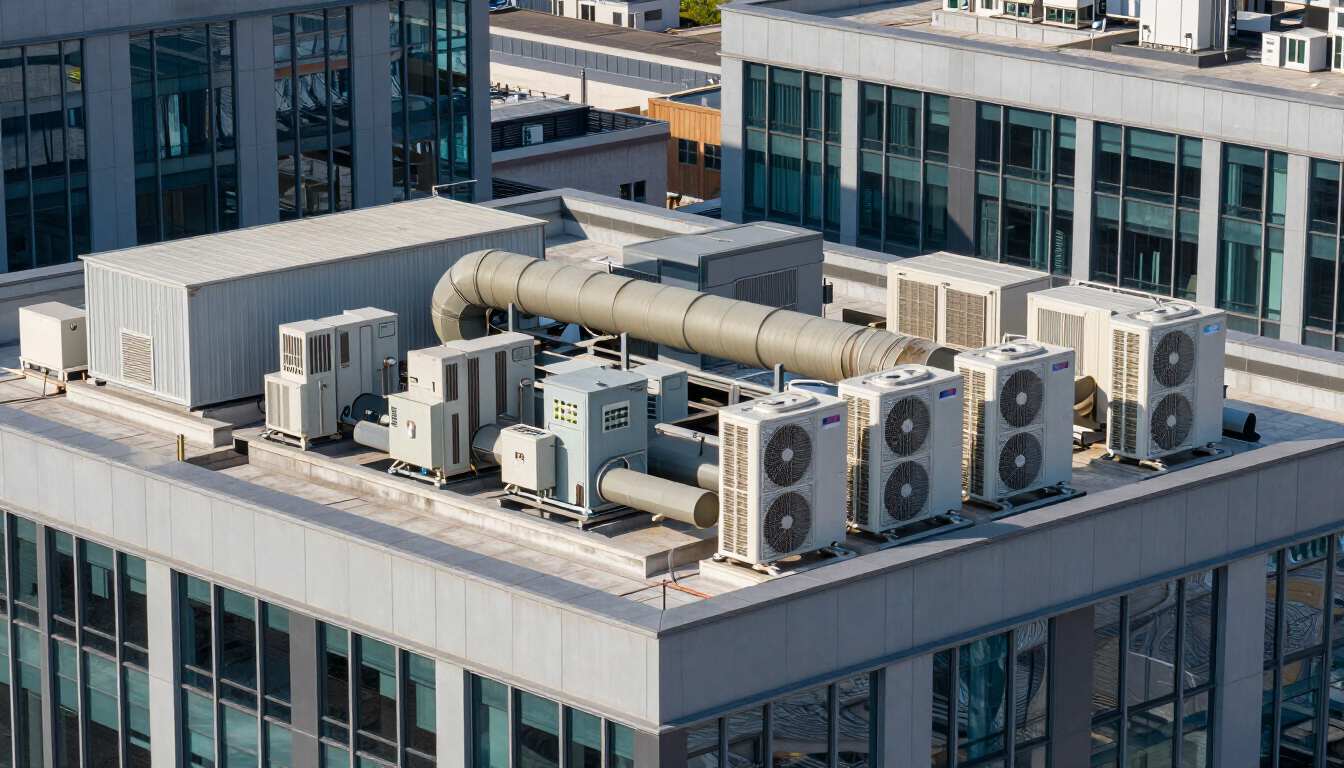
For businesses across California’s Central Coast, commercial HVAC systems are a major long-term investment. While regular maintenance can extend their lifespan, no system lasts forever. Eventually, every business must decide: continue repairing or invest in replacement.
Waiting too long to replace an aging HVAC system can lead to rising energy costs, frequent breakdowns, and operational disruptions. Replacing too early, however, can result in unnecessary capital expenses.
At SMI HVAC Services, we help businesses evaluate the right timing for HVAC replacement based on performance, cost, and long-term value. This guide will help you understand when replacement makes sense—and how to plan for it.
Average Lifespan of Commercial HVAC Systems
The lifespan of a commercial HVAC system depends on several factors, including system type, maintenance history, and environmental conditions.
Typical lifespan ranges:
- Rooftop Units (RTUs): 15–20 years
- Split Systems: 15–20 years
- Large Commercial Systems: 20–25 years
- Refrigeration Systems: 10–15 years
On the Central Coast, factors like salt air, humidity, and dust can shorten these timelines if systems are not properly maintained.
Key Factors That Affect HVAC Lifespan
Not all systems age at the same rate. Several factors influence how long your equipment will last.
1. Maintenance Frequency
Regular maintenance is the most important factor in extending system life.
2. Usage Intensity
Systems running long hours (restaurants, warehouses, retail) wear out faster.
3. Installation Quality
Improper installation can reduce efficiency and shorten lifespan.
4. Environmental Conditions
Coastal air, dust, and humidity accelerate wear and corrosion.
5. System Sizing
Incorrectly sized systems experience more strain and fail sooner.
Signs It’s Time to Replace Your Commercial HVAC System
Recognizing the warning signs early helps you avoid costly breakdowns and emergency replacements.
1. Rising Energy Costs
If your energy bills are steadily increasing without changes in usage, your system may be losing efficiency.
Older systems:
- Consume more energy
- Struggle to maintain temperature
- Operate less efficiently than modern units
2. Frequent Repairs
Occasional repairs are normal—but frequent service calls are a red flag.
Ask yourself:
- Are repairs becoming more frequent?
- Are costs increasing each time?
If repair expenses are adding up, replacement may be more cost-effective.
3. Inconsistent Temperatures
Uneven heating or cooling across your building often indicates system decline.
Common causes:
- Aging components
- Airflow issues
- Reduced system capacity
Persistent comfort issues are a strong indicator that replacement should be considered.
4. System Age
If your system is approaching or exceeding its expected lifespan, it’s time to evaluate replacement options—even if it’s still running.
Older systems:
- Are less efficient
- Are more prone to failure
- May use outdated refrigerants
5. Increased Downtime or Operational Disruption
For businesses, downtime is costly.
If HVAC issues are:
- Interrupting operations
- Affecting employees or customers
- Causing temporary closures
…it’s a clear sign that your system is no longer reliable.
6. Outdated Technology
Older systems lack modern features such as:
- Smart controls
- Energy-efficient compressors
- Advanced airflow management
Upgrading provides better performance and control.
Repair vs Replace: How to Decide
A common rule of thumb is the “50% rule”.
If:
- Repair cost exceeds 50% of replacement cost
- System is near the end of its lifespan
…it’s usually more economical to replace the system.
Comparison Table
| Factor | Repair | Replace |
|---|---|---|
| Cost | Lower upfront | Higher upfront |
| Efficiency | No improvement | Significant improvement |
| Lifespanc | Limited | Full new lifespan |
| Reliability | Uncertain | High |
Benefits of Replacing Your Commercial HVAC System
1. Improved Energy Efficiency
Modern HVAC systems are significantly more efficient than older models.
Benefits include:
- Lower energy bills
- Reduced environmental impact
- Compliance with current energy standards
2. Lower Maintenance Costs
New systems require fewer repairs and less frequent service.
3. Enhanced Comfort
Modern systems provide:
- Better temperature control
- Improved airflow
- More consistent performance
4. Advanced Technology
New systems offer:
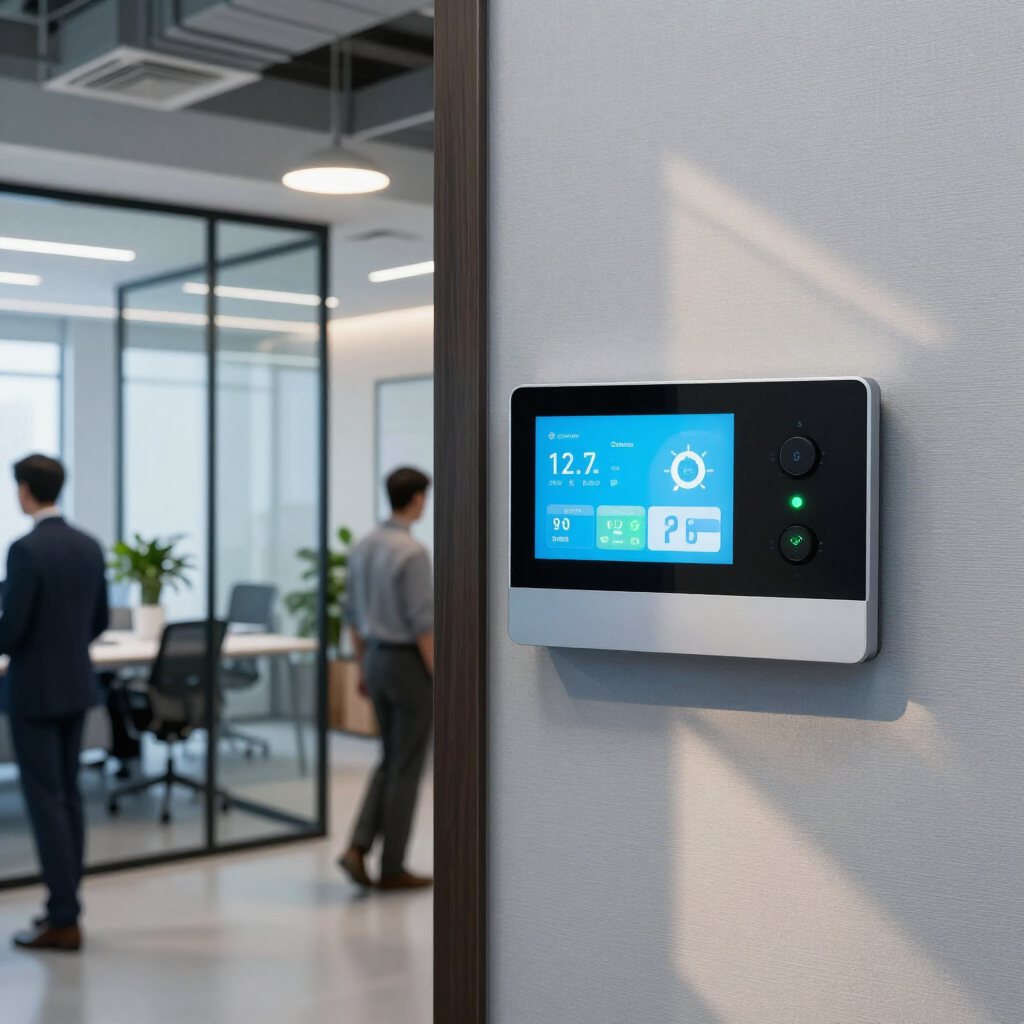
- Smart thermostats
- Building automation integration
- Remote monitoring
5. Increased Property Value
Upgraded HVAC systems can increase the value and appeal of commercial properties.
Planning for HVAC Replacement
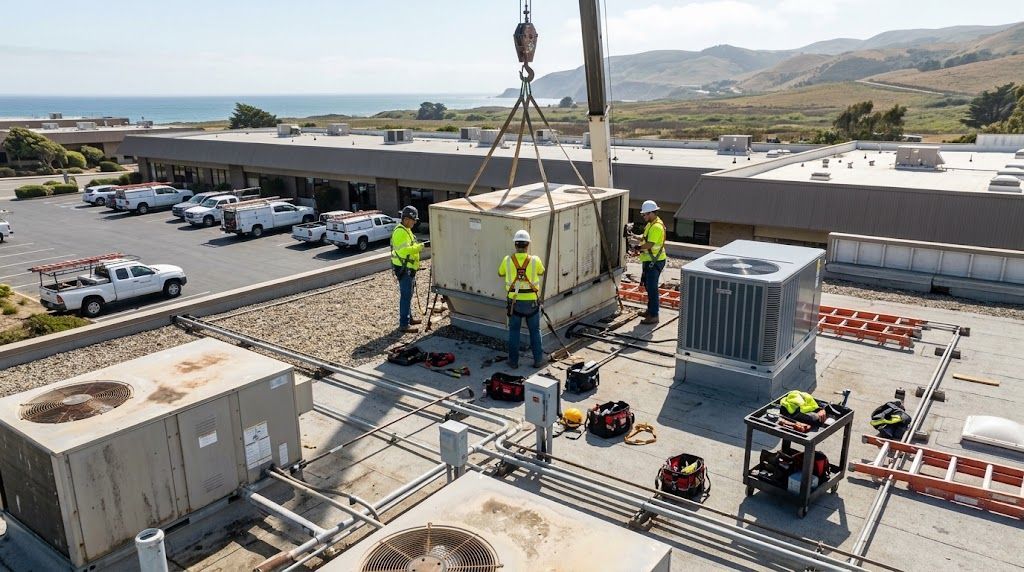
Replacing a commercial HVAC system requires planning to minimize disruption.
Steps include:
- System Evaluation
Assess current performance and condition - Load Calculation
Determine proper system size - Equipment Selection
Choose efficient, appropriate systems - Installation Planning
Schedule work to avoid business disruption - Post-Installation Testing
Ensure system performance and efficiency
Working with experienced professionals ensures a smooth transition.
Central Coast Considerations for Replacement
Businesses in this region should consider:
Coastal Conditions
- Use corrosion-resistant materials
- Apply protective coatings
Energy Efficiency Standards
- Meet California Title 24 requirements
Climate Variability
- Select systems that handle both coastal and inland conditions
Proper system selection improves durability and performance.
Timing Your Replacement Strategically
Avoid waiting for a system to fail completely.
Best times to replace:
- During off-peak seasons
- When repair costs start increasing
- Before major breakdowns occur
Planned replacements are less disruptive and often more cost-effective.
FAQs About Commercial HVAC Replacement
How long does replacement take?
Typically 1–5 days, depending on system size and complexity.
Can I replace part of my system instead of the whole unit?
In some cases, yes—but full replacement often provides better long-term value.
Are rebates available for new systems?
Yes. Many energy-efficient systems qualify for incentives.
Will a new system reduce my energy bills?
Yes. Most businesses see significant savings.
Can replacement be done without shutting down operations?
Often yes, with proper planning and scheduling.
Make the Right HVAC Investment for Your Business
Replacing your commercial HVAC system is a major decision—but it’s also an opportunity to improve efficiency, reduce costs, and enhance comfort.
By recognizing the signs early and planning strategically, Central Coast businesses can avoid costly disruptions and maximize long-term value.
SMI HVAC Services helps businesses evaluate, plan, and install commercial HVAC systems designed for performance, efficiency, and reliability.
SMI HVAC Services proudly supports businesses across California’s Central Coast with expert HVAC solutions.
Contact Us Today!
Reliable HVAC solutions start here. Get in touch for expert service you can trust!
Recent posts