Why Commercial Kitchen Ventilation Matters for Your Restaurant
A properly designed commercial kitchen ventilation system is essential for maintaining safe working conditions, controlling cooking odors, managing heat, and keeping restaurant operations running efficiently. Without adequate ventilation, commercial kitchens can become uncomfortable, expensive to operate, and potentially hazardous.
For restaurants, cafés, bakeries, hotels, and food service businesses throughout California’s Central Coast, ventilation is particularly important because kitchens generate significant heat, grease-laden vapors, moisture, and airborne contaminants throughout the day.
A well-maintained ventilation system helps remove these contaminants while supplying replacement air to keep the building properly balanced.
At SMI HVAC Services, we understand that commercial ventilation affects much more than temperature. It influences employee comfort, equipment performance, energy expenses, and the overall dining experience.
Whether you're operating a busy restaurant in Santa Maria, managing a commercial kitchen in San Luis Obispo, or maintaining a hospitality property in Santa Barbara County, understanding your ventilation system can help you avoid costly operational problems.
What Is a Commercial Kitchen Ventilation System?
A commercial kitchen ventilation system is a combination of mechanical equipment designed to remove heat, smoke, grease particles, moisture, and cooking odors from food preparation areas.
Unlike standard commercial air conditioning, kitchen ventilation must manage contaminants generated directly by cooking equipment.
Most commercial kitchen ventilation systems include several essential components.
1. Commercial Exhaust Hoods
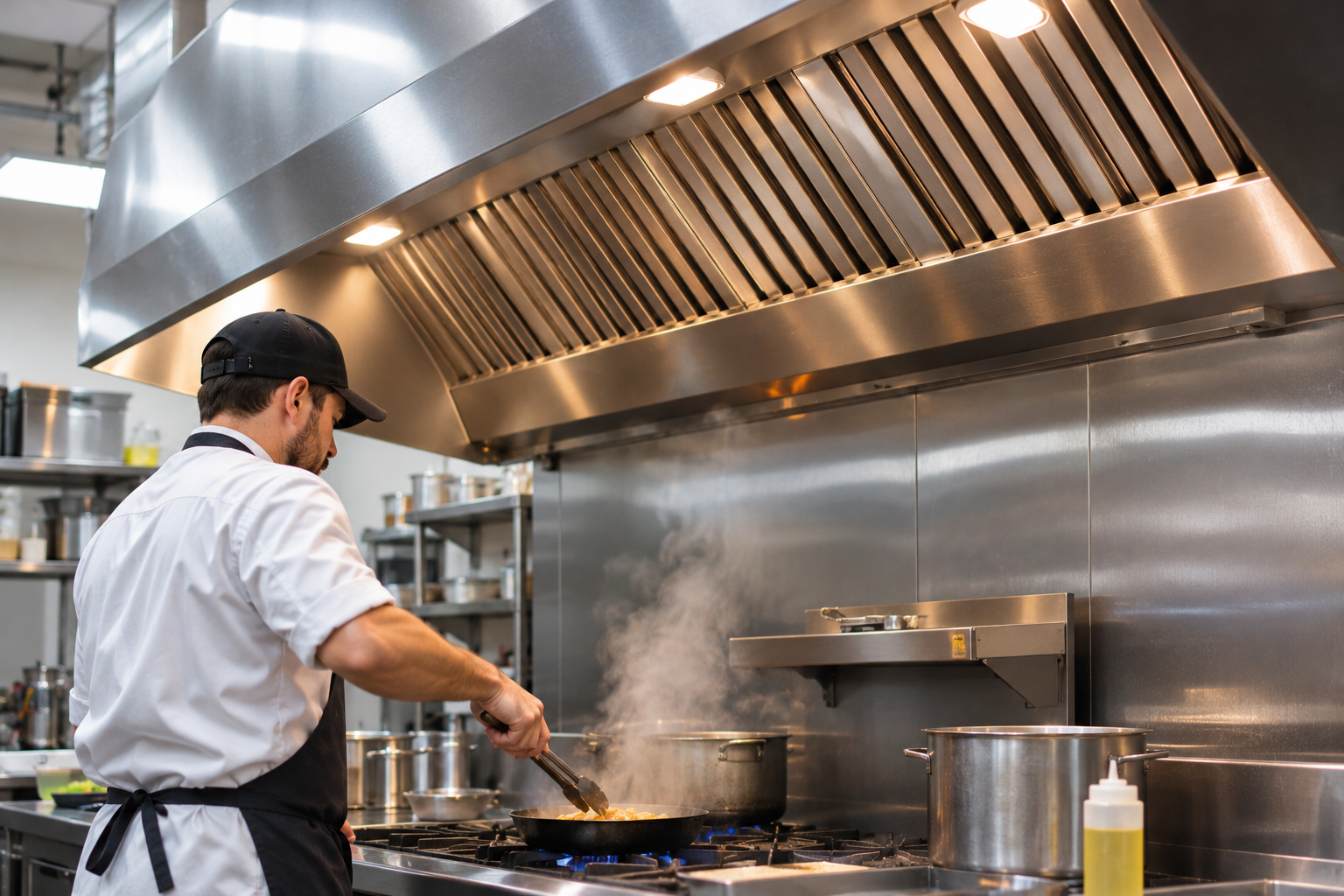
Exhaust hoods capture heat, smoke, and cooking vapors before they spread throughout the kitchen.
Two common types include:
- Type I hoods: Designed for cooking equipment that produces grease and smoke, such as fryers, griddles, and charbroilers.
- Type II hoods: Used for certain heat- and moisture-producing equipment that does not generate grease-laden vapors.
Selecting the correct hood depends on the equipment, cooking process, and applicable mechanical and fire codes.
2. Exhaust Fans
Commercial exhaust fans pull contaminated air through the hood and duct system before discharging it outdoors.
Proper fan performance is essential for maintaining adequate capture of cooking emissions.
3. Make-Up Air Systems
When exhaust fans remove large amounts of air, replacement air must enter the building.
A make-up air system supplies this replacement air in a controlled manner, helping maintain appropriate building pressure and ventilation performance.
4. Ductwork
Commercial kitchen exhaust ducts transport cooking emissions from the hood to the outdoor discharge point.
Grease exhaust ducts have specialized construction, access, and cleaning requirements because accumulated grease presents a fire hazard.
5. Controls and Safety Components
Depending on the installation, commercial kitchen ventilation may include airflow controls, interlocks, variable-speed fans, fire suppression coordination, and other safety features.
These components must work together for the system to operate correctly.
5 Reasons Proper Kitchen Ventilation Is Essential
1. Protects Employees from Excessive Heat
Commercial kitchens generate substantial heat from ovens, fryers, grills, dishwashing equipment, and other appliances.
Without effective ventilation, indoor temperatures can become uncomfortable and potentially unsafe.
Excessive heat can contribute to fatigue, reduced concentration, and physical discomfort during long shifts.
Proper ventilation helps remove cooking heat at its source. When paired with suitable air conditioning and make-up air equipment, it can improve working conditions.
For Central Coast restaurants, this is especially important during warm weather when outdoor temperatures increase the load on cooling equipment.
2. Helps Reduce Fire Hazards
Cooking equipment produces grease-laden vapors that can accumulate inside hoods, filters, fans, and exhaust ducts.
Without proper cleaning, these deposits create a serious fire risk.
Commercial kitchens should follow applicable fire codes and recognized standards, including NFPA 96, which addresses ventilation control and fire protection for commercial cooking operations.
Routine inspection and professional grease exhaust cleaning are important parts of a comprehensive kitchen safety program.
Importantly, ordinary HVAC maintenance does not replace specialized grease exhaust cleaning or fire suppression inspections.
Restaurant owners should coordinate these services with qualified providers.
3. Improves Indoor Air Quality
Cooking releases airborne particles, moisture, odors, and combustion byproducts.
When ventilation is inadequate, these contaminants can spread into dining rooms, employee break areas, and adjacent commercial spaces.
Effective exhaust capture and suitable replacement air help reduce the movement of cooking emissions throughout the building.
Benefits can include:
- Fewer persistent cooking odors
- Reduced airborne grease deposits
- Better comfort for kitchen employees
- Improved separation between cooking and dining areas
- More effective control of moisture
Ventilation should be evaluated alongside filtration, air conditioning, and building pressure to address the complete indoor environment.
4. Supports Energy Efficiency
Poorly designed ventilation systems can waste considerable energy.
For example, an exhaust fan operating at unnecessarily high airflow may remove large amounts of already-conditioned indoor air.
The building's heating and cooling systems must then work harder to condition incoming replacement air.
Modern ventilation strategies may include demand-controlled kitchen ventilation, which adjusts exhaust and make-up airflow according to cooking activity where permitted and properly designed.
The U.S. Department of Energy provides guidance on commercial building energy performance and efficiency improvements.
5. Helps Restaurants Maintain Regulatory Compliance
Commercial kitchen ventilation must meet applicable building, mechanical, fire, and health requirements.
Depending on the project, requirements may address:
- Exhaust hood selection and installation
- Minimum exhaust airflow
- Grease duct construction
- Make-up air provisions
- Fire suppression coordination
- Equipment clearances
- Inspection and maintenance access
California restaurants must also consider applicable provisions of the California Mechanical Code and local authority requirements.
A qualified contractor can help determine which requirements apply to a particular installation or renovation.
What Happens When Commercial Kitchen Ventilation Is Inadequate?
Ventilation problems often develop gradually.
Restaurant owners may initially notice excessive heat or lingering cooking odors without realizing that the underlying cause involves airflow imbalance.
Over time, additional symptoms may appear.
Excessive Kitchen Temperatures
If cooking heat is not captured effectively, temperatures may rise throughout the preparation area.
This can increase cooling demand and make working conditions uncomfortable.
Smoke Escaping from Exhaust Hoods
Smoke or steam escaping beyond the hood's capture area can indicate inadequate exhaust airflow, unfavorable air currents, or an improperly configured hood.
Negative Building Pressure
When exhaust airflow exceeds available replacement air, the building can develop excessive negative pressure.
Possible symptoms include doors that are difficult to open, drafts, and unintended airflow through building openings.
Unusual Equipment Noise
Rattling, vibration, or changes in fan noise may indicate worn bearings, loose components, or other mechanical problems.
Rising Utility Bills
Ventilation equipment that operates inefficiently can increase both fan electricity consumption and heating or cooling expenses.
These warning signs should prompt a professional evaluation rather than repeated thermostat adjustments.
Why Make-Up Air Is Critical in Commercial Kitchens
Make-up air is one of the most overlooked parts of commercial kitchen ventilation.
Every cubic foot of air removed by an exhaust system must be replaced by air entering the building.
Without a properly designed replacement air strategy, the building may experience pressure imbalances.
Consider a restaurant operating a large exhaust hood during lunch and dinner service.
If the exhaust system removes more air than the building can replace through its intended ventilation equipment, outdoor air may enter through doors, windows, and unintended openings.
This can create uncomfortable drafts and interfere with kitchen exhaust capture.
Properly designed make-up air equipment helps address these issues.
Depending on the system, replacement air may also be heated or cooled before entering occupied spaces.
For restaurants throughout the Central Coast, this helps manage changing outdoor conditions while supporting stable kitchen operation.
Commercial Kitchen Ventilation Maintenance: What Should Be Checked?
Regular inspections help identify performance issues before they become serious operational problems.
A commercial ventilation maintenance program should consider the following areas.
| Component | Important Maintenance Considerations |
|---|---|
| Exhaust fans | Inspect operation, vibration, motors, and mechanical condition |
| Make-up air units | Check filters, fans, controls, and heating or cooling operation |
| Airflow controls | Verify settings and equipment response |
| Duct connections | Inspect accessible sections for damage and leakage |
| HVAC equipment | Check cooling performance, filters, and airflow |
| Hood and grease exhaust system | Arrange specialized cleaning and inspection at code-required intervals |
Maintenance frequency depends on cooking volume, equipment type, operating hours, and applicable regulations.
A high-volume restaurant with extensive frying operations may need more frequent attention than a smaller kitchen with limited cooking activity.
The appropriate schedule should be established based on actual operating conditions.
How Central Coast Conditions Affect Commercial Kitchen Ventilation
California's Central Coast includes a wide range of commercial environments, from coastal hospitality properties to agricultural communities and inland restaurant districts.
These environments can affect ventilation equipment differently.
Coastal Salt Air
Restaurants near the ocean may experience accelerated corrosion of exposed metal equipment.
Outdoor exhaust fans, electrical connections, and make-up air units should be inspected for corrosion.
Agricultural Dust
Businesses near agricultural operations may experience increased airborne dust.
Dust accumulation can affect filters, coils, and outdoor ventilation equipment, making regular inspection particularly important.
Seasonal Temperature Changes
Although many coastal communities experience moderate temperatures, inland areas can become significantly warmer.
Ventilation systems must accommodate both cooking heat and changing outdoor conditions.
Older Commercial Buildings
Some established Central Coast restaurants operate in buildings originally designed for different uses.
When kitchens expand or new cooking equipment is installed, existing ventilation may no longer meet operational or code requirements.
An evaluation can help determine whether modifications are needed.
When Should a Restaurant Upgrade Its Ventilation System?
Not every ventilation problem requires complete replacement.
Some issues can be resolved through maintenance, repairs, control adjustments, or airflow corrections.
However, an upgrade may be appropriate when:
- Cooking equipment has changed significantly
- The kitchen layout has been renovated
- Exhaust performance remains inadequate after repairs
- Make-up air capacity is insufficient
- Existing equipment is severely corroded
- Frequent breakdowns disrupt operations
- Energy costs are consistently high
A professional assessment should consider the entire kitchen ventilation arrangement rather than focusing on a single fan or hood.
Replacing one component without evaluating system balance can leave the original problem unresolved.
How to Choose a Commercial Ventilation Contractor
Restaurant owners should look for a contractor who understands the relationship between ventilation, heating, cooling, and building operations.
Important questions include:
- Does the contractor have experience with commercial HVAC and ventilation equipment?
- Can they evaluate exhaust and make-up air performance?
- Do they understand applicable California mechanical requirements?
- Can they explain recommended repairs and their costs clearly?
- Will they coordinate with specialized hood-cleaning, fire protection, or other contractors when necessary?
For businesses operating multiple locations, consistent service documentation and clear communication are particularly valuable.
SMI HVAC Services is a family-owned, minority-owned HVAC business committed to fair, transparent service for commercial customers.
Its commercial heating, air conditioning, refrigeration, and ventilation services support the needs of businesses throughout its Central Coast service area.
FAQs About Commercial Kitchen Ventilation
How often should commercial kitchen ventilation systems be inspected?
Inspection frequency depends on equipment type, cooking volume, and operating conditions. HVAC and make-up air equipment may benefit from quarterly or semiannual maintenance, while grease exhaust systems require inspections and cleaning according to applicable fire safety requirements.
Why is my restaurant kitchen hotter than the dining room?
Commercial cooking equipment generates substantial heat. Inadequate exhaust capture, insufficient make-up air, poor airflow balance, or undersized cooling equipment can contribute to excessive kitchen temperatures. A professional assessment can identify the cause.
Can poor ventilation increase restaurant energy bills?
Yes. Excessive exhaust airflow, poorly controlled fans, and improperly conditioned replacement air can increase heating and cooling costs. Correcting airflow and control problems may reduce unnecessary energy consumption.
What is the difference between kitchen exhaust and make-up air?
Kitchen exhaust removes heat, smoke, grease-laden vapors, and other cooking emissions. Make-up air replaces the exhausted air to support proper building pressure and system performance. Both must be designed to work together.
Does commercial kitchen ventilation require permits in California?
New installations and significant modifications generally require permits and inspections. Exact requirements depend on the project and local jurisdiction. Restaurant owners should confirm requirements before beginning work.
Keep Your Commercial Kitchen Operating Efficiently with SMI HVAC Services
Reliable commercial kitchen ventilation supports safe operations, employee comfort, customer satisfaction, and long-term equipment performance.
For restaurants and food service businesses throughout California's Central Coast, maintaining effective exhaust, make-up air, heating, and cooling systems is an important part of protecting daily operations.
Whether you're experiencing excessive kitchen temperatures, airflow problems, unusual equipment noises, or rising operating costs, addressing the issue early can help prevent larger disruptions.
SMI HVAC Services provides commercial HVAC, refrigeration, and ventilation services with a commitment to dependable workmanship, honest communication, and practical solutions.
Contact SMI HVAC Services to discuss your commercial ventilation or HVAC needs.

Contact Us Today!
Reliable HVAC solutions start here. Get in touch for expert service you can trust!
Recent posts

Commercial HVAC Compliance and Regulations in California: What Central Coast Businesses Need to Know